How to find grants in Europe, across borders
Published 06 Oct 2026. Facts checked against the official sources on 14 Nov 2026.
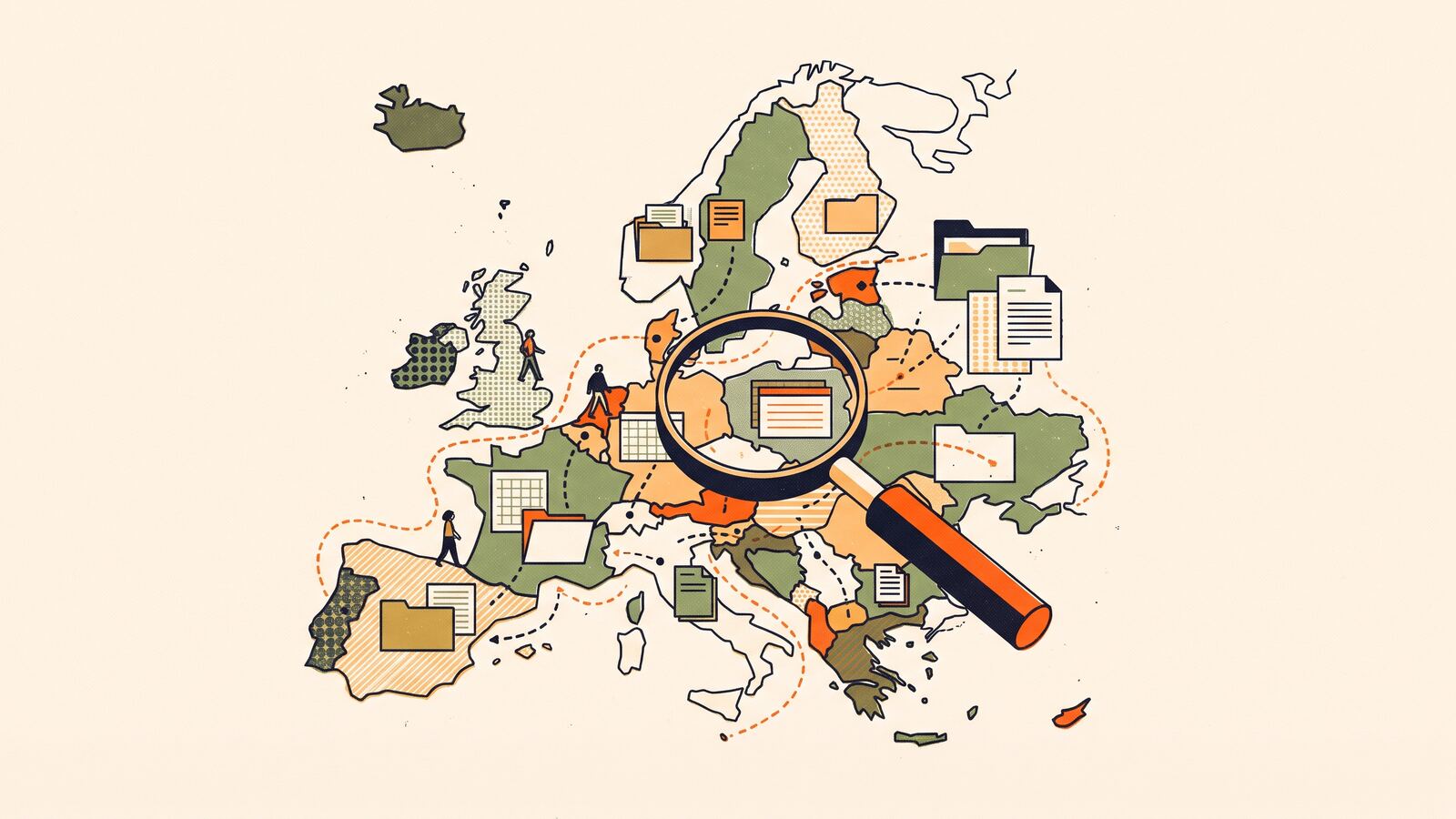
To find a grant in Europe, search the official publishers, not the lists that copy them: the EU's Funding and Tenders Portal for EU programmes, and the national or regional agency of the country where you are established. GrantLedger collects those official calls every night into one free, searchable ledger, so one search covers 32 countries plus the EU-wide programmes.
Why it is hard
There is no single European register of public funding. The European Commission publishes its own calls. Each country publishes its own, often through several bodies: an innovation agency, a research council, a ministry, a region. Each one writes in its own language and uses its own words for the same thing: a subsidy in one country is an aid, a scheme, a voucher or a call in another.
So a company in Lithuania does not see a programme open to it in Brussels, and a researcher moving to Austria does not know where Austrian calls are listed. The funding exists. The search is the obstacle.
The method, in five steps
- Write down who is applying. Country and region, legal form (company, non-profit, research organisation, public body, individual), size, age, sector. Almost every call filters on these before anything else.
- Search two levels. Your own country, and the EU-wide programmes that any eligible organisation in Europe can enter. On this site: pick your country, then look at the EU-wide calls.
- Search by what you do, in English. Every record in the ledger carries an English summary and English search terms, whatever the language of the publisher. Try energy efficiency, artificial intelligence or export.
- Check the type of funding. A grant is not repaid. A loan is. A guarantee helps you borrow. A tax credit lowers what you owe. A voucher pays a supplier. They are all public funding, and the right one depends on your cash position, not on the headline amount.
- Read the official page before you invest time. Every record links to the publisher's page. Check the deadline, who can apply, whether partners are required and what must be co-financed. Then decide.
What the ledger holds today
Current calls by country, counted now:
| Country | Current calls |
|---|---|
| Spain | 14,590 |
| France | 2,486 |
| United States | 1,534 |
| Germany | 1,404 |
| Italy | 894 |
| Denmark | 801 |
| Netherlands | 676 |
| Belgium | 536 |
| European Union | 523 |
| Czechia | 400 |
| Ireland | 398 |
| Finland | 339 |
| Greece | 320 |
| Portugal | 281 |
| Norway | 214 |
| United Kingdom | 158 |
| Lithuania | 157 |
| Switzerland | 125 |
| Slovenia | 123 |
| Austria | 119 |
| Poland | 72 |
| Slovakia | 68 |
| Sweden | 54 |
| Latvia | 27 |
| Croatia | 23 |
| Malta | 21 |
| Estonia | 18 |
| Iceland | 17 |
| Bulgaria | 16 |
| Romania | 12 |
| Hungary | 9 |
| Cyprus | 7 |
| Luxembourg | 3 |
The largest sources today: Spain BDNS, France aides-entreprises.fr, US Grants.gov, Germany DSEE Förderdatenbank, Italy Incentivi Italia, Denmark Statens Tilskudspuljer, Netherlands RVO, EU Funding & Tenders Portal, Czechia dotaceeu.cz, Ireland National Enterprise Hub, Finland Haeavustuksia.fi, Greece ESPA. The full list, with what is not covered yet, is on the coverage page.
Words that change from country to country
- Call (appel, Ausschreibung, convocatoria, bando, oproep): a dated opening with a deadline.
- Scheme or programme: a standing instrument, often open all year, such as a guarantee or a tax deduction. Examples explained here: the Dutch BMKB and MIA and Vamil, and Norway's SkatteFUNN.
- De minimis: small aid that a funder can grant without EU approval, up to a ceiling per company. See de minimis explained.
- Consortium: several independent organisations applying together, often from different countries. Most collaborative EU research calls require one. See the EIC Pathfinder rules for an example.
What is free and what is not
Searching the ledger, reading every record and following the link to the publisher is free and needs no account. The data is open: the code is on GitHub and the method is on the methodology page. The paid part, Pro, screens every current call against your profile with fixed rules and emails you the new ones that pass; it also connects the ledger to ChatGPT or Claude. Nobody takes a share of the funding you obtain. If you would rather have the application written and managed for you, see how a full writing service compares.
Closing soonest across the ledger
Live from the ledger, collected every night from official sources. Each line opens the record with the link to the publisher's page.
- Contributi a sostegno della gestione associata di funzioni fondamentali comunali - Anno 202622 Nov 20261 days left€4,713,002
- Contributi a sostegno della Polizia municipale, della Polizia provinciale e della Polizia metropolitana di Torino per gli anni 2026-202722 Nov 20261 days left€1,000,000
- Reading for Redemption: Comparative Research of the Brazilian Reading for Remission Model22 Nov 20261 days left£15,000
- Reading for Redemption Phase 2 Expansion22 Nov 20261 days left£80,000
- CONVOCATORIA PARA LA CONCESIÓN DE SUBVENCIONES DE INCENTIVO AL CONSUMO PROGRAMA “TARJETA IMPULSA COMERCIO SEGOVIA 2026”Opens 27 Oct 2026Deadline 23 Nov 2026€250,000
- SUBVENCIÓN DIRECTA. PROGRAMA DE SUBVENCIONES DEL FONDO DE COHESION TERRITORIAL PARA MUNICIPIOS DE POBLACIÓN INFERIOR O IGUAL A 1.000 HABITANTES 2026Opens 24 Oct 2026Deadline 23 Nov 2026€1,361,747
- AYUDAS ECONÓMICAS PARA PROYECTOS DEPORTE PARA TODOS - TEMPORADA 2026/2027Opens 16 Nov 2026Deadline 23 Nov 2026€100,000
- CONVOCATORIA PUBLICA DE SUBVENCIONES PARA LAS ASOCIACIONES DE VECINOS: REALIZACION DE ACTIVIDADES Y MANTENIMIENTO Y ALQUILER DE LAS SEDES SOCIALESOpens 09 Nov 2026Deadline 23 Nov 2026€25,574
Sources
- Counts on this page are computed from the ledger when the page is loaded.
- The official sources and their licences: methodology and coverage.
- EU calls: Funding and Tenders Portal, European Commission.
This guide explains a public scheme in plain English. It is not legal, tax or financial advice. Rules, amounts and dates change: the official page linked under Sources is the authority, and you apply there or through the body it names. Found an error? Tell us.